The essential paid media stats your health & wellbeing brand should be tracking
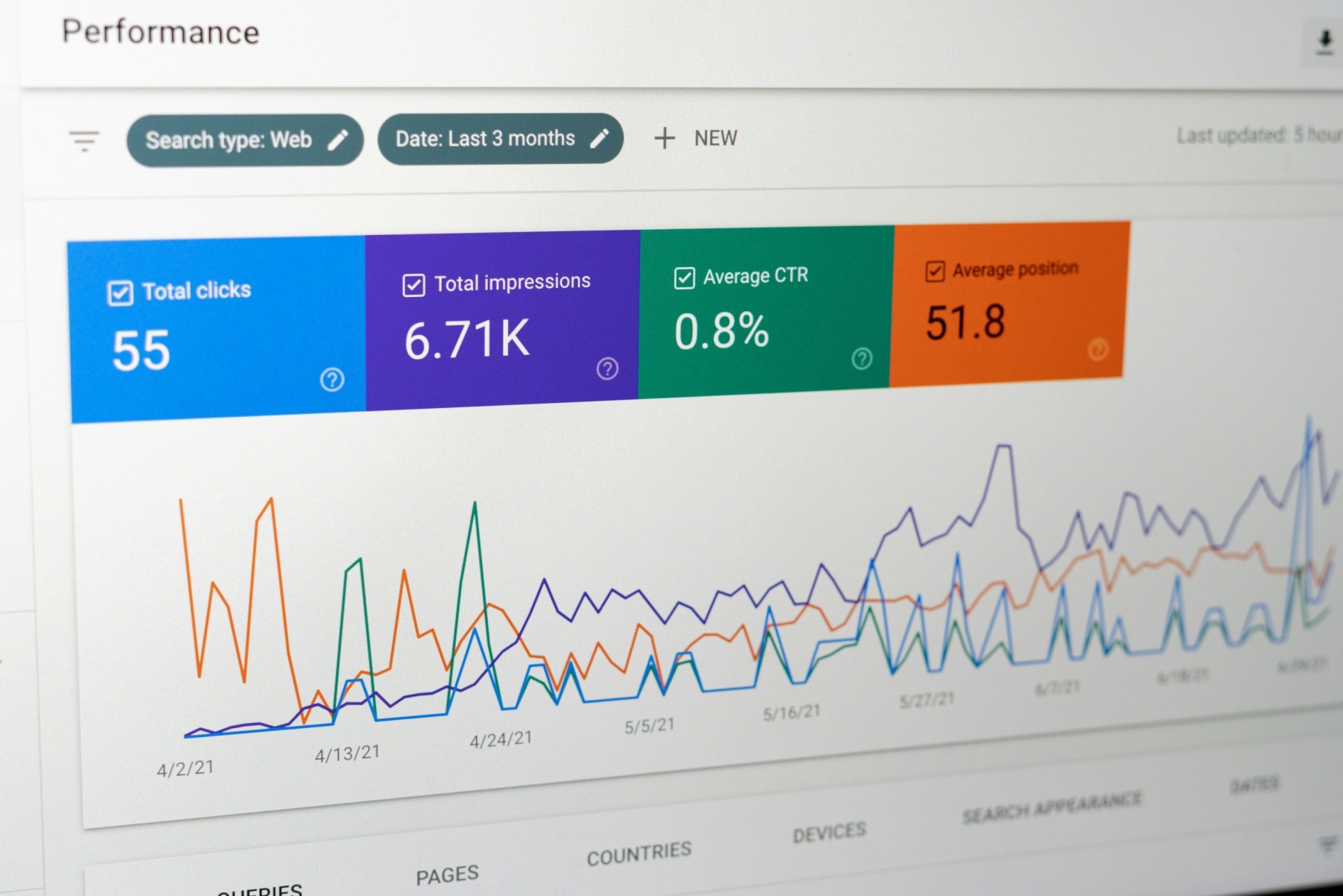
ROAS is looking strong, and the dashboard is showing healthy clicks, so why isn’t your health and wellness brand growing or profitable?
It’s probably because your paid media reporting is defaulting to platform metrics, which aren’t necessarily the most useful ones for your brand. Standard metrics describe ad activity, not business results, and to get a clearer picture, you need to personalise the stats you’re tracking.
Depending on whether you’re selling a product, subscription, or service, different metrics will apply to you. In this guide, we’ll take you through it step by step, and if you’re still unsure, we’re always happy to have a chat.
Why one set of metrics doesn’t suit every health and wellness brand
Deciding which metrics are best for you to track starts with identifying the one that most closely matches how your business makes money.
For example, a supplement brand makes money on margin per order and repeat purchases.
A subscription brand makes its money on how long customers remain subscribed.
A clinic or wellbeing provider makes money on (attended) appointments and the lifetime value of that client.
And a corporate wellness provider makes money on signed contracts, usually after a fairly long B2B cycle.
As you can see, even in the health and wellness sector, there are fundamental differences in the way different business models make money. So, it follows that they will each need a bespoke set of metrics to track that give them the insight they need into what works and what doesn’t.
This is especially important to understand given that platforms can often mislead by default, and the metrics they highlight aren’t necessarily the ones you should be focusing on. Meta and Google typically optimise for clicks, leads or purchases, and not profit, retention or attendance. If those metrics aren’t relevant to your brand, they could be skewing your perceptions of how your brand is truly performing.
It’s time to get a handle on the metrics that matter most to you, and we’re here to help you do it. The good news is that product brands, subscription brands and service brands typically have a distinct set of metrics to track, so you can skip straight to the category you fall into.
(We’ll warn you now that things are about to get very acronym-heavy, but we’ll explain each one as we go…).
The metrics product brands (supplements and ecommerce) should track
Starting with brands that sell products, e.g., supplements, the metric that should have your full attention should be POAS (Profit on Ad Spend). This is your revenue, minus the product cost and variable costs like shipping, payment fees, your operating costs, etc., and then divided by ad spend. If you arrive at a POAS of 1.0, you’ve broken even.
POAS beats ROAS (Return on Ad Spend) as the metric to track for product brands because ROAS ignores margin. Two products with the same ROAS can have very different profitability.
And what other metrics should you be tracking? Your Customer Acquisition Cost (CAC) is an important one to keep an eye on, ideally split between new and returning customers. Average Order Value (AOV) and contribution by margin are also useful to track. It’s also interesting to monitor your repeat purchase rate and MER (Marketing Efficiency Ratio, which is your total revenue divided by total marketing spend). We also advise product brands to track ad approval rate and account health, because rejections can waste your spend.
The metrics subscription brands should track
The subscription model is starkly different from the product model, so it makes sense that the metrics to track will differ too. With a subscription, the first purchase is only the start of what will be a (hopefully) ongoing relationship. So, the cost of acquiring that customer only makes sense in the wider context of how long they stay with you.
If you’re a subscription-based brand in the health and wellness space, here’s what we recommend you focus on.
Firstly, keep an eye on the cost per trial or the cost per first subscription order. And if you offer a trial period, look at the conversion rate from trial through to paid. Churn rate and retention rate should be tracked by cohort (month 1, 3 and 6). Your customer lifetime value (LTV) is useful to track, as is the LTV:CAC ratio (the relationship between the lifetime value of a customer and the cost incurred to acquire that customer). We always advise subscription brands to monitor their payback period, too (in other words, how long it takes for the customer to cover their acquisition cost).
It should be noted that retention data usually sits in your subscription platform or CRM, not in the ad platform, so you’ll need to be able to connect the two.

The metrics service-based businesses should track
Right then, service-based brands, it’s your turn. If you run an appointment-based service (for example clinics, practitioners, therapists and other wellbeing services), then the cost per lead is only the start. If things go well then a loyal, long-term customer is an incredibly valuable asset, so when it comes to metrics, that’s what we focus on.
With service-based brands, we track the full funnel. That means scrutinising the lead-to-booking rate, then the booking-to-attended rate (also called the show rate). We also look at the cost per booked appointment and per attended appointment. Finally, we track the cost per new client and, crucially, revenue per client including repeat visits.
When people enquire about an appointment, the time it takes for your team to respond can make or break that lead, so the speed to lead rate is useful to track. And then there’s the offline conversion tracking, because not every appointment is booked online. Offline conversion tracking links your booking system or CRM with your ad platforms so the data can be fed back into them and track which ads lead to real bookings.
Finally, service-based health and wellness brands that operate in the B2B corporate wellness and EAP (Employee Assistance Programme) space are selling to businesses, not private individuals, and this affects the metrics you need to measure.
In this case, focus should be on your cost per qualified lead, cost per meeting/demo booked, pipeline value and cost per opportunity. You might also want to track your sales cycle length and win rate by channel to understand what’s working for you and what’s not. And many brands like to monitor where the leads are coming from: are leads coming from big enough companies and senior decision-makers? For B2B service-based brands, you’re looking at a much longer-term paid media strategy, so judging a campaign on its performance over 30 days can be misleading.
Metric tracking pitfalls to avoid
Check your approach with whoever leads your compliance or data protection to ensure you’re doing things by the book. And beyond that, there are three metric pitfalls specific to the health and wellness industry that you need to look out for:
- Attribution gaps: Privacy settings and consent limit what your ad platform sees, so use blended metrics (MER, total bookings) alongside platform numbers. Be aware that ad platform numbers can double-count if you’re using multiple platforms, as they don’t talk to each other to remove duplicate clicks (e.g., if someone clicks on a Facebook ad, then later clicks on a Google ad and makes a purchase, it can be reported as two sales rather than one.
- Sensitive data: Health-related data carries stricter rules, so event names and parameters should not reveal health conditions.
- Disconnected systems: If bookings, subscriptions and CRM data sit in different places, your numbers will rarely agree without a deliberate setup.
How Fueld monitors and reports on your data
At Fueld, we know the health and wellness industry inside out, and our clients span product brands, subscription brands and service-based brands.
When first working with a customer, we begin by looking at your business model (how you make money) before building a bespoke metrics reporting system that brings transparency and insight to your paid media efforts. There are often other metrics that will also be useful to track in your particular scenario, and we can help you work out what those are.
Our team has over three decades of experience in helping brands just like yours succeed with their digital marketing, and can help you find the right campaigns with the right metrics to suit your brand.
If you’d like to explore your metrics and reporting in more detail, we’re always happy to have a chat. Book a call via our contact form and we’ll be in touch.
More from the blog




About the Article
- Written by Johannes Dethleff
- October 21 2026
- Blog